


A Spectacular Discovery: The Hidden Underground Forest of China
In a groundbreaking discovery, scientists in China have uncovered a massive underground forest at a depth of 192 meters below the surface. This enigmatic ecosystem, concealed within a colossal sinkhole, is teeming with ancient trees and lush vegetation, sparking global excitement about the potential for species previously unknown to science. This subterranean paradise offers a rare glimpse into a pristine environment untouched by modern civilization, opening new avenues for scientific research and exploration.
The Discovery
The hidden forest was found in the Guangxi Zhuang Autonomous Region of southern China, a region renowned for its karst landscapes—geological formations shaped by the dissolution of soluble rocks such as limestone. These formations often feature dramatic sinkholes, caves, and underground rivers. However, the discovery of such a vast and intact underground forest is unprecedented.
The sinkhole, one of the largest of its kind, measures approximately 306 meters in length, 150 meters in width, and plunges to a depth of 192 meters. Explorers descending into the chasm were astonished to find an expansive forest thriving in the sunlight that filters through the sinkhole’s opening. The unique environment, shielded from external influences, creates a microclimate that supports a thriving ecosystem.
Ancient Giants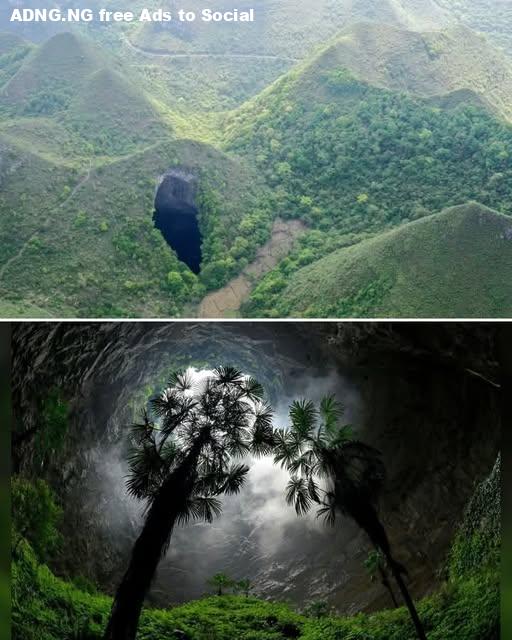
The most remarkable feature of this underground forest is the presence of towering ancient trees, some reaching nearly 40 meters in height. These trees, potentially centuries old, form a dense canopy, under which a variety of plants and other flora flourish. The sheer size and age of these trees suggest that the forest has remained undisturbed for an extended period, offering an invaluable snapshot of an ancient ecological system.
A Haven for Biodiversity
Scientists believe that this underground forest could harbor species unknown to science. The isolation and unique conditions of the sinkhole create an environment conducive to the evolution of unique flora and fauna. Initial expeditions have already revealed a plethora of plant and insect life, with researchers eager to conduct more comprehensive studies.
China has previously uncovered similar sinkholes with unique ecosystems, but the scale and complexity of this discovery set it apart. The potential for discovering new species adds to the scientific significance, as these organisms could offer insights into evolution, adaptation, and biodiversity.
Ecological and Scientific Importance
The discovery of the underground forest is not just a testament to the wonders of nature but also a reminder of the importance of preserving such environments. These ecosystems are fragile and could be easily disrupted by human activities or climate change. Understanding and protecting them is vital for maintaining global biodiversity.
For scientists, the forest represents an unparalleled natural laboratory. Studying its ecosystem could yield valuable information about the interactions between species, the adaptations required for survival in unique conditions, and the impact of isolation on evolutionary processes. The forest might even hold clues to combating ecological challenges such as habitat loss and climate change.
Challenges and Future Exploration
Despite the excitement surrounding this discovery, exploring the sinkhole’s depths poses significant challenges. The remote location, coupled with the technical difficulties of accessing and navigating the sinkhole, limits the frequency and scope of expeditions. Moreover, preserving the pristine condition of the forest while conducting research requires careful planning and execution.
Future explorations aim to map the forest in detail, catalog its biodiversity, and study its geological and ecological features. Advanced technologies such as drones, remote sensing, and DNA analysis will play a crucial role in these efforts, ensuring minimal disturbance to the ecosystem.
A Window into Earth’s Past
The underground forest in China is more than just a natural wonder; it is a window into Earth’s past. As researchers delve deeper into its secrets, they may uncover evidence of how life adapted to changing environmental conditions over millennia. This knowledge could inform strategies for preserving biodiversity and managing ecosystems in a rapidly changing world.
Conclusion
The discovery of the underground forest at a depth of 192 meters in China is a reminder of nature’s boundless capacity to surprise and inspire. With its ancient trees and potential for unknown species, this hidden ecosystem is a treasure trove of scientific and ecological significance. As researchers embark on the journey to explore and understand this remarkable find, the world waits with bated breath for the stories it will tell about life’s resilience, adaptability, and interconnectedness.