Mon. May 25th, 2026
Spread the love
views

0

1 total views, 1 views today

Puff, the magic dragon lived by the sea
And frolicked in the autumn mist in a land called Honahlee
Little Jackie paper loved that rascal puff
And brought him strings and sealing wax and other fancy stuff
oh

Puff, the magic dragon lived by the sea
And frolicked in the autumn mist in a land called Honahlee
Puff, the magic dragon lived by the sea
And frolicked in the autumn mist in a land called Honahlee

Together they would travel on a boat with billowed sail
Jackie kept a lookout perched on puff’s gigantic tail
Noble kings and princes would bow whene’er they came
Pirate ships would lower their flag when puff roared out his name
oh

Puff, the magic dragon lived by the sea
And frolicked in the autumn mist in a land called Honahlee
Puff, the

by Kahli Scott October 04, 2017

Puff, Smaug and Other Famous Dragons

You might have guessed that we love dragons here at Dragonspace.
Perhaps our name gave it away? We’re fascinated by these enigmatic
beasts and the stories they inspire. Guardians, protectors, sages,
monsters, villains, friends and companions – dragons have appeared
in lore and legend as all these things and more.

Though long associated with tales of old, dragons are still
going strong in popular culture, becoming icons in some of our
favourite contemporary fantasy stories. Let’s take a look at a few
of our favourites:

Puff

Are you already starting to sing the song? Puff was
immortalised by the ’60s pop-folk group Peter, Paul and
Mary, though the lyrics to the famous tune are actually based
on a poem by a university student named Leonard Lipton. In the
song, Puff the dragon lives in a magical land called Honahlee,
where he gets up to all kinds of adventures with his friend Jackie
Paper. Puff is undoubtedly a docile friendly dragon, though his
story isn’t all sunshine and rainbows. At the end of the song,
Jackie Paper stops coming to visit Puff, causing the dragon to
“sadly slip into his cave.” The tale is said to be about growing up
and the loss of innocence – Puff represents the magic of childhood,
when the imagination roamed free. Maybe that’s why dragons continue
to hold a mystical grip on us.

Smaug

Fearsome Smaug is the antagonist in Tolkien’s The
Hobbit 
tales. Like a traditional dragon of Western lore,
Smaug greedily guards the treasure in the Dwarf kingdom of Erebor
and launches a fiery attack on the village of Laketown. Some
scholars theorise that Tolkien was inspired by the ‘old
night-scather’ from the epic poem Beowulf when
creating Smaug, as Tolkien was a Beowulf expert. Vengeful,
treasure-hungry and aggressive, Smaug embodies the villainous
dragon archetype. Tolkien interestingly chose to give Smaug the
ability to talk, making him a little more humanoid than
monstrous.

Falkor
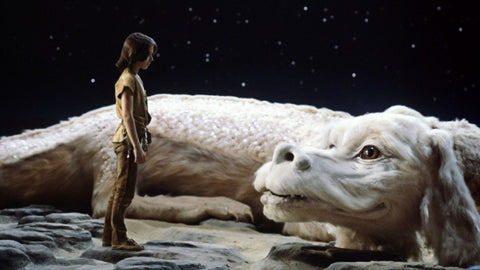
Falkor the luckdragon is the faithful companion of heroes
Bastian and Atreyu in the Germany fantasy novel The
Neverending Story
. In appearance, Falkor takes elements from a
traditional Oriental dragon as well as a domestic dog, specifically
a Golden Retriever or a Labrador…notoriously faithful animals!
Falkor is optimistic, wise and friendly, and possesses
extraordinary luck even in impossible circumstances. He’s the type
of dragon we’d definitely want as a pet, though he’d need a bigger
backyard than your standard dog.

Mushu

Witty firecracker Mushu often steals the scene in the 1998
Disney animated film Mulan. In many ways, Mushu is a
traditional Chinese dragon, with his blue horns, gold mustache and
lack of wings, more resembling a lizard or serpent than a Western
dragon.  Once a guardian spirit of the Fa ancestors, Mushu was
demoted after failing to protect a family member and is desperate
to regain his prior position throughout the film. While Mushu is
comedic and sometimes buffoon-like, he is ultimately a guardian and
protector to Mulan. In Chinese mythology, dragons represent luck,
fortune and protection, so Mushu fits the bill.

Drogon, Rhaegal and Viserion

Game of Thrones has recently catapulted dragons back
into pop culture fame. Even since Daenerys Targaryen stepped out of
the fire holding her babies, these dragons have created some of the
television show’s most stunning scenes. While Daenerys’s dragons
are ultimately faithful to her – their mother – they’re also wild
and unpredictable, causing her to have to lock them up when she
realises she can’t completely control them. Fierce and impressive,
everyone’s looking forward to seeing what role these beasts will
play in books and episodes to come. But no spoilers…

Norbert
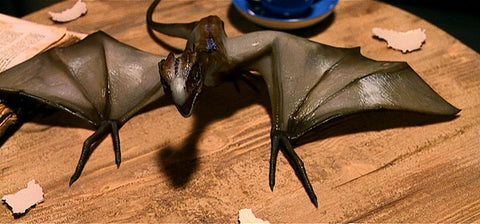
Not a lot of people would use the word ‘adorable’ to describe a
dragon, unless you’re Rubeus Hagrid, of course. In the first of
the Harry Potterbooks, we get to meet Norbert, the
Norwegian Ridgeback baby dragon that animal-loving Hagrid hatches
from an egg in his hut. In appearance, Norbert is a traditional
Western dragon that looks like a ‘crumpled black umbrella’ with
large spiny wings, stubby horns and orange eyes. Sadly, Hagrid has
to give Norbert up to a dragon reserve in Romania after the dragon
develops a reputation for biting. Norbert is just one of the
dragons that feature in the series, from fierce Hungarian Horntails
to Common Welsh Greens and Swedish Short-Snouts. We’d love to meet
all the dragons of J.K Rowling’s imagination (from a safe distance,
of course).

From cuddly companions to wicked villains, dragons
certainly add conflict and colour to some of our favourite stories!
Who’s your top dragon? Let us know in the comments
below.

OUR FAVOURITE DRAGON PRODUCTS:


Post Views: 1

Read more

By admin

You missed

From Tramadol to Canadian to Exol-5 The New Drug Destroying Nigerian Youths An Investigative Article .From Tramadol to Canadian to Exol-5: The New Drug Destroying Nigerian Youths An Investigative Report on the Shifting Landscape of Substance Abuse in Nigeria Nigeria faces a severe and evolving drug crisis, particularly among its youth. What began with the widespread abuse of Tramadol has progressed through mixtures like “Canadian” to newer pharmaceutical diversions such as Exol-5. This shift reflects deeper issues: easy access to prescription drugs, weak regulation, socioeconomic pressures, and aggressive street-level marketing. NDLEA operations and health studies reveal a public health emergency that threatens an entire generation. Phase 1: The Tramadol Epidemic (2010s–Early 2020s) Tramadol, a synthetic opioid prescribed for moderate to severe pain, became Nigeria’s most notorious street drug. Cheap, potent, and widely smuggled (often from India and other Asian countries), it offered users energy, euphoria, and pain relief — appealing to commercial drivers, laborers, students, and young men seeking confidence or stamina. Scale of the Problem: Millions of tablets seized annually by NDLEA. High prevalence among young males aged 15–35. Linked to increased crime, sexual violence, organ damage (kidney failure, seizures), and mental health breakdowns. Contributed to broader opioid misuse alongside codeine cough syrups. Government responses included tighter import controls and public awareness campaigns, but these only displaced demand to other substances rather than eliminating it. Phase 2: The Rise of “Canadian” (Mid-2020s) “Canadian” or “Canadian Loud” emerged as a popular code for high-grade cannabis (often indica-dominant strains) or cannabis mixed with other synthetics. It gained traction as users sought alternatives or combinations to Tramadol’s effects. This phase marked a move toward imported or locally cultivated premium weed, sometimes laced with stronger chemicals. Youths in urban centers like Lagos, Kano, Jos, and Onitsha embraced it for its perceived “cleaner” high compared to opioids. However, it fueled polydrug use — combining cannabis with opioids, sedatives, or alcohol — amplifying health risks. Phase 3: Exol-5 – The Current Threat (2024–2026) Exol-5 (Benzhexol Hydrochloride / Trihexyphenidyl 5mg), originally a prescription medication for Parkinson’s disease and drug-induced movement disorders, has become the latest pharmaceutical being heavily abused. Why Exol-5? Euphoric Effects: Users report intense euphoria, hallucinations, and a sense of detachment — making it attractive as a cheap “upper” or escape. Accessibility: Sold over-the-counter or on the black market despite being a controlled prescription drug. NDLEA has seized millions of pills in single operations (e.g., 3.1 million pills in Kano in late 2024, and over 5.6 million combined with Tramadol in other busts). Street Names: Exol, Artane, Benzhexol, “Farin Mallam” (in Northern Nigeria). Demographics: Prevalent among youths, laborers, and even psychiatric patients who divert prescriptions. Studies show abuse rates as high as 25% among certain outpatient groups. Health Consequences: Anticholinergic toxicity: Confusion, dry mouth, blurred vision, urinary retention, constipation, and in high doses — delirium, psychosis, seizures, and heart issues. Long-term: Cognitive impairment, addiction, exacerbated mental health disorders. Often mixed with Tramadol, codeine, or cannabis, creating dangerous synergies. In cities like Jos, Exol-5 sits alongside diazepam, Rohypnol, and Tramadol on street markets, easily available to teenagers and young adults. Why This Evolution Continues Supply-Side Failures: Porous borders, corrupt officials, and overproduction of pharmaceuticals enable diversion. Demand Drivers: Unemployment, poverty, peer pressure, trauma, and the pursuit of performance enhancement (e.g., for “hustle” culture). Weak Regulation: Many pharmacies sell restricted drugs without prescriptions. Online and street vendors fill gaps. Displacement Effect: Cracking down on one substance (Tramadol/codeine) pushes users and dealers toward the next available option. NDLEA reports ongoing large seizures, but the problem persists due to high profitability and low risk for mid-level distributors. Broader Impacts on Nigerian Youths Education: Increased dropout rates and poor academic performance. Mental Health: Rising cases of psychosis and depression. Economy: Lost productivity among the working-age population. Crime and Violence: Drug-fueled robberies, cultism, and family breakdowns. Public Health System Strain: Overburdened hospitals treating overdoses and chronic complications. Young people aged 15–39 remain the hardest hit, with national surveys showing drug use prevalence significantly above global averages. What Must Be Done Stronger Enforcement: Consistent prosecution of corrupt enablers and large-scale traffickers. Regulation: Crackdown on rogue pharmacies and better tracking of prescription drugs. Prevention & Rehabilitation: School programs, community outreach, and expanded treatment centers (currently woefully inadequate). Economic Alternatives: Address root causes like youth unemployment. Public Awareness: Honest campaigns highlighting real dangers of “Exol-5” and similar drugs. Conclusion From Tramadol’s opioid grip to “Canadian” cannabis culture and now Exol-5’s anticholinergic highs, Nigeria’s drug crisis is mutating faster than responses can contain it. Exol-5 represents the dangerous new frontier — a legitimate medicine turned youth destroyer due to misuse and greed. Without urgent, multi-layered intervention — combining supply disruption, demand reduction, and socioeconomic support — an entire generation risks being lost to addiction. The time for half-measures is over. Nigeria’s future depends on winning this fight.