
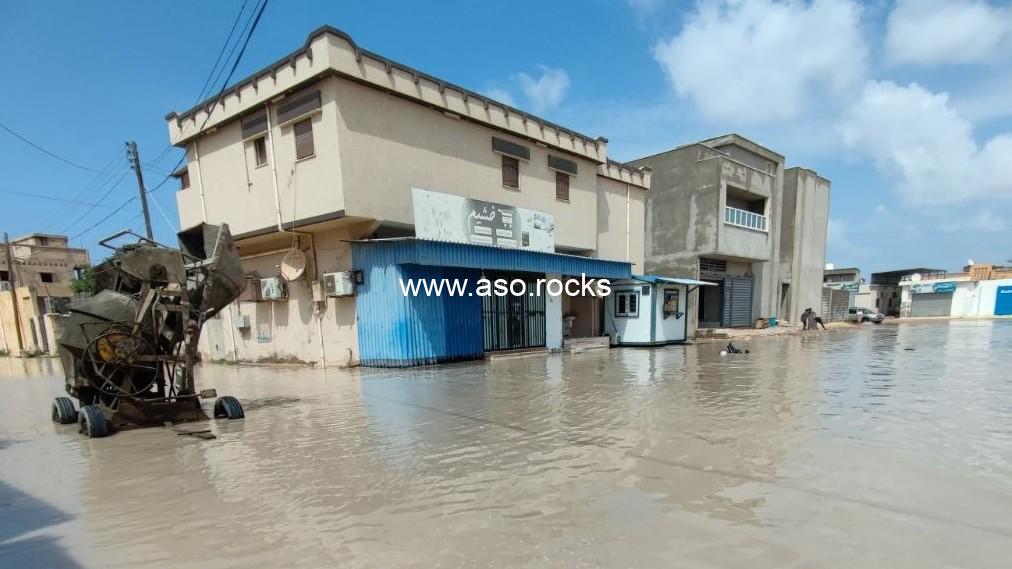
CAIRO (AP) — Mediterranean storm Daniel caused devastating floods in Libya that swept away entire neighborhoods and wrecked homes in multiple coastal towns in the east of the North African nation. As many as 2,000 people were feared dead, one of the country’s leaders said Monday.
The destruction appears greatest in Derna, a city formerly held by Islamic extremists in the chaos that has gripped Libya for more than a decade and left it with crumbling and inadequate infrastructure. Libya remains divided between two rival administrations, one in the east and one in the west, each backed by militias and foreign governments.
The confirmed death toll from the weekend flooding stood at 61 as of late Monday, according to health authorities. But the tally did not include Derna, which had become inaccessible, and many of the thousands missing were believed carried away by waters.
advertisers.ng
Video by residents of the city posted online showed major devastation. Entire residential areas were erased along a river that runs down from the mountains through the city center. Multi-story apartment buildings that once stood well back from the river were partially collapsed into the mud.
In a phone interview with al-Masar television station Monday, Prime Minister Ossama Hamad of the east Libyan government said that 2,000 were feared dead in Derna, and thousands were believed missing. He said Derna has been declared a disaster zone.
Libya’s chief prosecutor is seeking more details on minister’s meeting with Israel’s chief diplomat
People burn photos showing Israeli Foreign Minister Eli Cohen and his Libyan counterpart Najla Mangoush in Tripoli, Libya, Sunday, Aug. 27, 2023. Cohen and Mangoush met in the Italian capital, Rome, last week, according to the Israeli foreign ministry. (AP Photo/Yousef Murad)
Libya’s foreign minister suspended, flees country after meeting with Israel’s chief diplomat
Ahmed al-Mosmari, a spokesman for the country’s armed forces based in the east, told a news conference that the death toll in Derna had surpassed 2,000. He said there were between 5,000 and 6,000 reported missing. Al-Mosmari attributed the catastrophe to the collapse of two nearby dams, causing a lethal flash flood.
Since a 2011 uprising that toppled and later killed long-time ruler Moammar Gadhafi, Libya has lacked a central government and the resulting lawlessness has meant dwindling investment in the country’s roads and public services and also minimal regulation of private building. The country is now split between rival governments in the east and west, each backed by an array of militias.
advertisers.ng
Derna itself, along with the city of Sirte, was controlled by extremist groups for years, at one point by those who pledged allegiance to the Islamic State group, until forces loyal to the east-based government expelled them in 2018.
At least 46 people were reported dead in the eastern town of Bayda, Abdel-Rahim Mazek, head of the town’s main medical center said. Another seven people were reported dead in the coastal town of Susa in northeastern Libya, according to the Ambulance and Emergency Authority. Seven others were reported dead in the towns of Shahatt and Omar al-Mokhtar, said Ossama Abduljaleel, health minister. One person was reported dead Sunday in the town of Marj.
The Libyan Red Crescent said it lost contact with one of its workers as he attempted to help a stuck family in Bayda. Dozens of others were reported missing, and authorities fear they could have died in the floods that destroyed homes and other properties in several towns in eastern Libya, according to local media.
In Derna, local media said the situation was catastrophic with no electricity or communications.
Essam Abu Zeriba, the interior minister of the east Libya government, said more than 5,000 people were expected to be missing in Derna. He said many of the victims were swept away towards the Mediterranean.
advertisers.ng
“The situation is tragic,” he declared in a telephone interview on the Saudi-owned satellite news channel Al-Arabiya. He urged urged local and international agencies to rush to help the city.
Georgette Gagnon, the U.N. humanitarian coordinator for Libya, said early reports showed that dozens of villages and towns were “severely affected … with widespread flooding, damage to infrastructure, and loss of life.”
“I am deeply saddened by the severe impact of (storm) Daniel on the country … I call on all local, national, and international partners to join hands to provide urgent humanitarian assistance to the people in eastern Libya,” she wrote on X platform, formerly known as Twitter.
In a post on X, The U.S. embassy in Libya said they were in contact with both the U.N. and Libyan authorities and were determining how to deliver aid to the most affected areas.
Over the weekend, Libyans shared footage on social media showing flooded houses and roads in many areas across eastern Libya. They pleaded for help as floods besieged people inside their homes and in their vehicles.
advertisers.ng
Ossama Hamad, the prime minister of the east Libya government, declared Derna a disaster zone after heavy rainfall and floods destroyed much of the city which is located in the delta of the small Wadi Derna on Libya’s east coast. The prime minister also announced three days of mourning and ordered flags across the country to be lowered to half-staff.
Controlling eastern and western Libya, Cmdr. Khalifa Hifter deployed troops to help residents in Benghazi and other eastern towns. Ahmed al-Mosmari, a spokesperson for Hifter’s forces, said they lost contact with five troops who were helping besieged families in Bayda.
Foreign governments sent messages of support on Monday evening. Sheikh Mohammed bin Zayed Al Nahyan, the president of the United Arab Emirates, said his country would send humanitarian assistance and search-and-rescue teams to eastern Libya, according to the UAE’s state-run WAM news agency.
Turkey, which supports the country’s Tripoli-based government in the west, also expressed condolences, along with neighboring Algeria.
Storm Daniel is expected to arrive in parts of west Egypt on Monday, and the country’s meteorological authorities warned about possible rain and bad weather.
<p>The post Flooding in eastern Libya after weekend storm leaves 2,000 people feared dead, prime minister says first appeared on aso.rocks.</p>